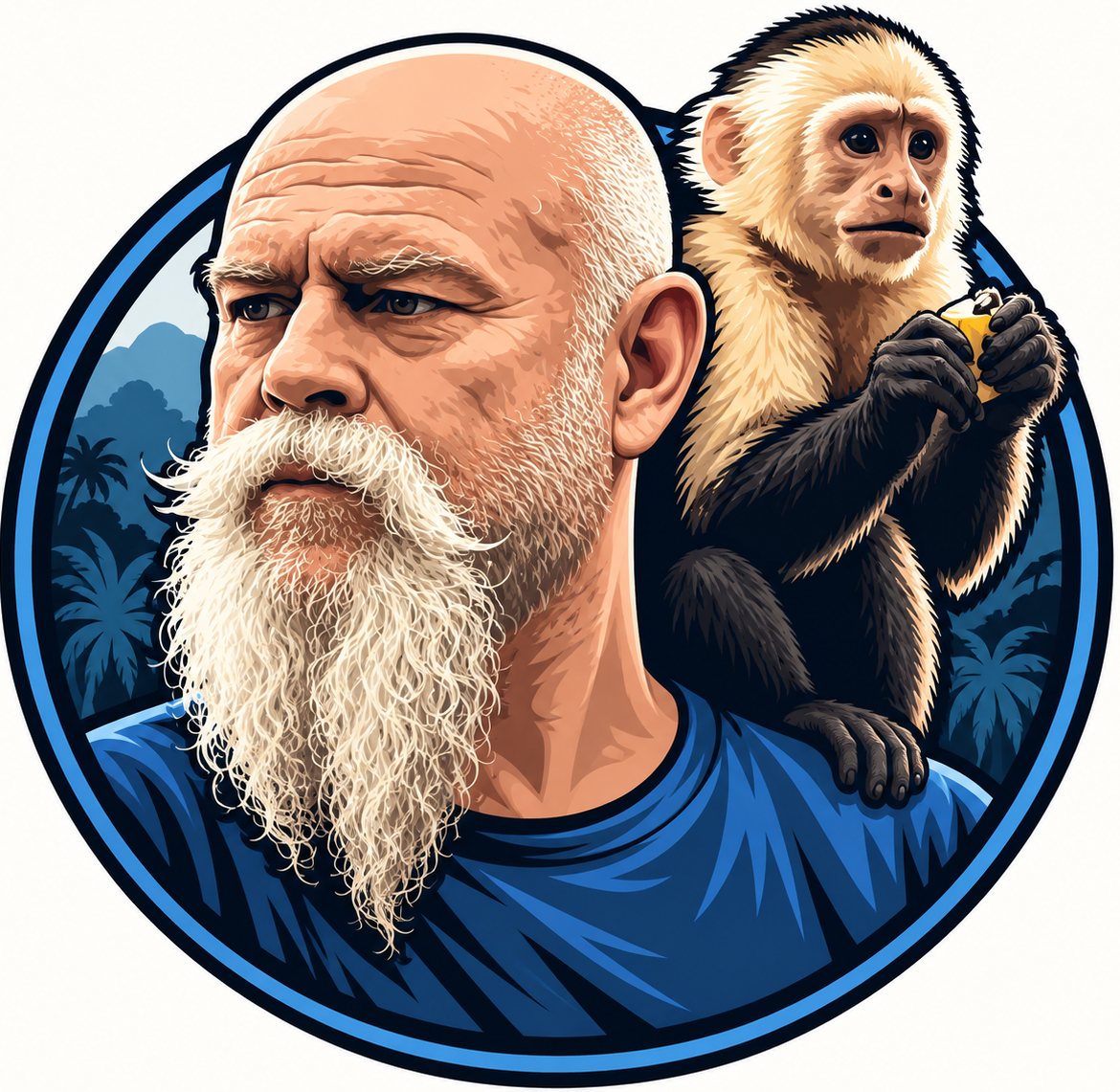

On the road again. I turned 64 yesterday, so naturally I celebrated with another 24 hours of travelling. That’s how you know you’ve made it.
Here’s the thing nobody tells you about travel at this age: the destination isn’t the problem. New places, old places, I’m good with all of it. The problem is the bill that shows up at the end of the trip. Even after ten hours of sleep, my body wakes up and hands me an itemized invoice.
Today the hands are leading the charge. Arthritis has decided my knuckles are its personal project. And I say that as a guy whose knees have been opened up six times, with eighteen separate procedures done in there. Surgeons have been in and out of those joints like it’s a revolving door at a mall. None of it compares to the hands this morning. The back, the shoulders and the mind have all been told to take a number and sit in the back seat. Again.
But.
I’m sitting on a deck of a condo overlooking the Pacific Ocean in Costa Rica. Again. For another month, visiting Mike. So file my complaints accordingly.
The howler monkeys went off right on cue as the sun came up around 5 a.m. If you’ve never heard them, a howler sounds like a cross between a lion with a chest cold and a chainsaw that’s angry with you. They are among the loudest land animals on the planet, and their call can carry for kilometres through the forest. Nature’s alarm clock, no snooze button, no off switch.
Then the streets start filling up the moment there’s daylight. That’s how it works down here, like most of Central America. Costa Rica sits only about 10 degrees north of the equator, so the day length barely changes all year. The sun is up around 5:30 and gone by about 6 p.m., give or take, every month of the year. So the day starts early, because once the lights go out, they’re out.
Max relax
Visits with Mike aren’t non-stop tourist marathons. Mike wants to live here, so these trips are about one thing: maximum relaxation. Strolling, healing, and not much else. Weed is plentiful here too, which helps with the “healing” part of the agenda.
Mike’s not alone in the idea. Costa Rica’s Pensionado visa ranks fourth of 46 retirement programs worldwide, largely on its $1,000-a-month income requirement and its tax treatment. And Canadians have clearly figured something out: Canadian visits to Costa Rica are up 24% this year, with long stays driving millions in new spending. Apparently half of Canada is now a snowbird with a passport and a grudge against winter. ticotimesticotimes
One fact this old soldier always appreciates: Costa Rica abolished its army in 1948 and put the money into schools and healthcare instead. A country with no army, run by people who seem genuinely happy. Make of that what you will.
The routine
I have this trip down to a drill now:
Train to Toronto. Hotel night, because departures are around 9 a.m. Land around 1 p.m. local time. Pick up the rental. Walmart, then Costco. Then two hours and 75 kilometres later, you’re at the coast.
Yes, you read that right. Seventy-five kilometres takes two hours. Potholes, one-lane bridges, trucks, cattle, the occasional dog that has a firm opinion about the road, and a speed limit that changes every few hundred metres for reasons known only to God and the MOPT.
That stretch of road is also a big part of why there are so many motorcycle crashes here. Ticos mostly ride small bikes, the vast majority under 300cc, and they ride them exactly the way I used to ride my old GSZ750: through traffic like a hot knife through butter. Between cars, between trucks, between things that shouldn’t have a gap between them.
The numbers are grim. From 2012 to 2021, road deaths in Costa Rica dropped for most types of road users except motorcyclists, whose fatalities rose by more than half, and riders made up 45% of all road deaths. A University of Costa Rica study found the death rate per passenger kilometre is 15 times higher on a motorcycle than in a car. And in 2025, the Road Safety Council recorded 263 motorcycle deaths out of 572 people killed at crash scenes. costa rica road safety +2
And yet, in close to six months of total time spent in Costa Rica, I have never actually seen an accident. Not for lack of opportunity. I’ve watched hundreds of near-misses that should have ended badly and somehow didn’t. Either the riders are better than the stats suggest, or I’ve been very lucky in when I look.
Pura vida
Costa Rica packs roughly 5% of the world’s biodiversity into a country smaller than Nova Scotia and New Brunswick combined. Monkeys, sloths, iguanas the size of small dogs, birds that look like someone spilled a paint store. The national motto, more or less, is “pura vida”, which means “pure life” and gets used for hello, goodbye, thanks, no worries, and pretty much everything else.
The sun’s starting to shine now. The howlers have made their point. The hands still hurt, but the coffee’s hot and the ocean’s not going anywhere.
Pura vida. My next adventure awaits.